E-mail:
info@zhongdongcable.com
Tel.: +86 198 2988 5532
Choosing between SWA and STA cable is not simply a matter of steel wire versus steel tape. For cable buyers, the real challenge is selecting an armour construction that meets the project's installation requirements, electrical specifications, and applicable standards. Understanding the differences before requesting a quotation can help prevent specification errors, unnecessary costs, and delays during project execution.
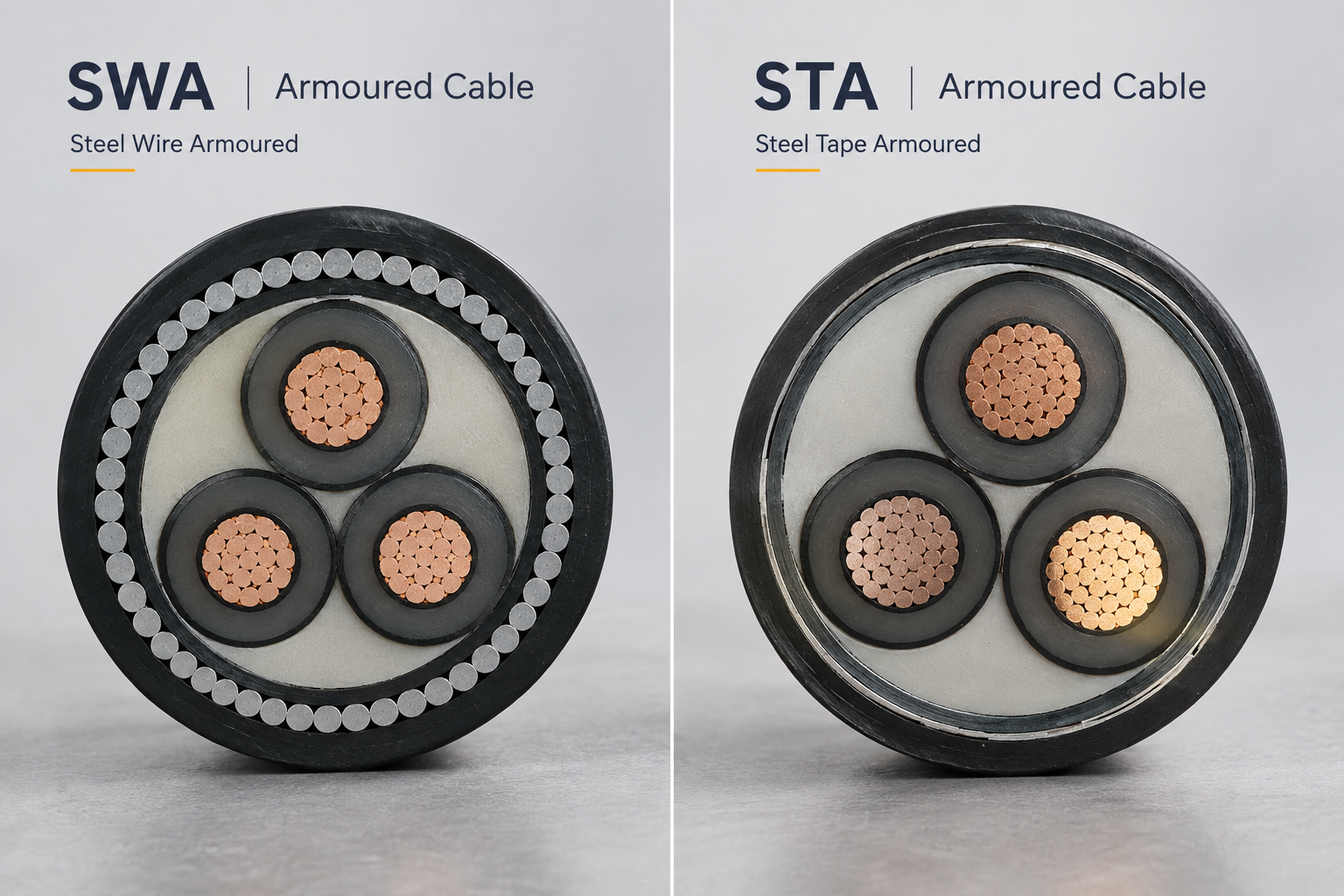
The main difference between SWA and STA cable is the type of steel armour used in its construction.
SWA (Steel Wire Armoured) cable uses steel wires as its armour layer. It is commonly specified for power distribution projects where mechanical protection is required. Its suitability depends on the cable design, installation conditions, and the mechanical loads it may encounter.
STA (Steel Tape Armoured) cable uses steel tapes as its armour layer. The tape arrangement provides mechanical protection within the overall cable construction, making it another option for projects that specify armoured power cables.The following table summarizes the key differences between SWA and STA cables in terms of armour material, flexibility, tensile strength, typical applications, and bending radius.
|
Comparison Item |
SWA Cable |
STA Cable |
|
Armour Material |
Steel wires |
Steel tapes |
|
Flexibility |
Generally better flexibility |
Relatively stiffer |
|
Tensile Strength |
Typically higher |
Generally moderate |
|
Typical Applications |
Power distribution requiring mechanical protection; installations where flexibility and tensile resistance are important |
Direct burial and projects where steel tape armour is specified |
|
Bending Radius |
Usually smaller |
Usually larger |
Note: The comparisons above are general tendencies and may vary with cable design, armour dimensions, voltage rating, and the applicable standard. Always refer to the manufacturer's data sheet and the project specification.
Neither construction is automatically the better choice for every application. The right option depends on the required cable specification, installation method, mechanical protection needs, and relevant standards.
When selecting an SWA or STA armoured cable, buyers should look beyond the armour material and consider the requirements of the complete cable system.
Start by identifying where and how the cable will be installed. Factors such as underground installation, cable routing, exposure to potential mechanical damage, and the conditions during installation can all affect the required cable construction.
Direct burial does not automatically mean that STA cable is the correct choice, just as SWA cable is not necessarily suitable for every installation. The project specification and applicable installation requirements should determine the final selection.
The cable's rated voltage, conductor size, number of cores, insulation, metallic screen, armour, and outer sheath must all match the project requirements.
For medium-voltage applications, buyers should pay particular attention to the insulation system and metallic screening arrangement. Changing the armour type alone does not make two cables technically equivalent.
Always check the required standards, approved cable construction, and project documentation before placing an order. Some projects specify SWA or STA explicitly, while others define the required construction through technical drawings or cable schedules.
If the specification names a particular armour type, confirm any proposed alternative with the project engineer or responsible technical team before ordering.
Cable cost should be evaluated against the complete specification rather than the armour type alone. Conductor material and size, insulation, voltage rating, sheath material, order quantity, and manufacturing requirements can all affect the quotation.
For procurement teams, providing a complete technical specification at the enquiry stage helps suppliers assess the requirement more accurately and reduces unnecessary clarification during the quotation process.
An armour designation is only one part of a cable's construction. For example, consider the specification:
CU/XLPE/CTS/SWA/PVC
CU: Copper conductor
XLPE:Cross-linked polyethylene insulation
CTS: Copper tape screen
SWA: Steel wire armour
PVC: Polyvinyl chloride outer sheath
In this construction, the conductor carries the electrical current, the XLPE insulation provides electrical insulation, the copper tape screen forms part of the cable's screening system, the steel wire armour provides mechanical protection, and the PVC sheath protects the cable's exterior.
Replacing SWA with STA changes the armour construction, but it does not mean the rest of the cable design can be ignored. Voltage rating, conductor requirements, screening, sheath, and applicable standards still need to be verified.
Zhongdong Cable manufactures medium-voltage armoured power cables for project-specific requirements. Different armour constructions and voltage ratings can be specified to meet different technical requirements, subject to the required cable design.
The CU/XLPE/CTS/SWA/PVC three-core power cable uses a copper conductor, XLPE insulation, copper tape screening, steel wire armour, and a PVC outer sheath. It is specified for a rated voltage of 8.7/15kV.
For projects requiring this specific construction, our 8.7/15kV SWA armoured cable provides a product reference for reviewing the cable design and technical requirements.
This cable may be considered for applications where its voltage rating, construction, and other technical characteristics meet the project specification.
The CU/XLPE/CTS/STA/PVC three-core power cable uses a copper conductor, XLPE insulation, copper tape screening, steel tape armour, and a PVC outer sheath. It is specified for a rated voltage of 12/20kV.
For projects requiring this configuration, our 12/20kV STA armoured cable offers a relevant product reference for evaluating the specified voltage rating and cable construction.
The final selection should always be checked against the project's electrical requirements, installation conditions, and applicable standards.
Important: These two products have different rated voltages. They illustrate two different armoured cable constructions and are not direct substitutes for one another. Always verify the complete technical specification before making a purchasing decision.
To help a cable manufacturer assess your requirements and prepare a more accurate quotation, provide as much of the following information as possible:
Rated voltage: For example, 8.7/15kV or 12/20kV
Conductor: Copper or aluminium, including conductor size
Cable configuration: Number of cores and required cross-sectional area
Cable construction: Insulation, metallic screen, armour type, and outer sheath
Applicable standards: IEC, BS, or the project-specific standard
Order quantity: Total length and preferred drum length, if specified
Installation details: Underground, in ducts, on cable trays, or another installation method
Delivery destination: Country and delivery location
If some technical details are not yet confirmed, you can send your bill of quantities (BOQ), cable schedule, tender document, or existing technical specification for review.
Selecting the correct armoured cable starts with understanding the project's technical requirements. Whether your specification calls for SWA or STA cable, confirming the voltage rating, cable construction, installation conditions, and applicable standards is essential before ordering.
As a cable manufacturer, Zhongdong Cable supports project enquiries for medium-voltage and other power cable requirements. Our team can review your stated specifications and help identify a suitable cable construction for your application.
Contact Zhongdong Cable with your cable schedule, BOQ, or technical specification. Include your required cable details, estimated quantity, and delivery destination so that we can better understand your project and discuss a suitable quotation.


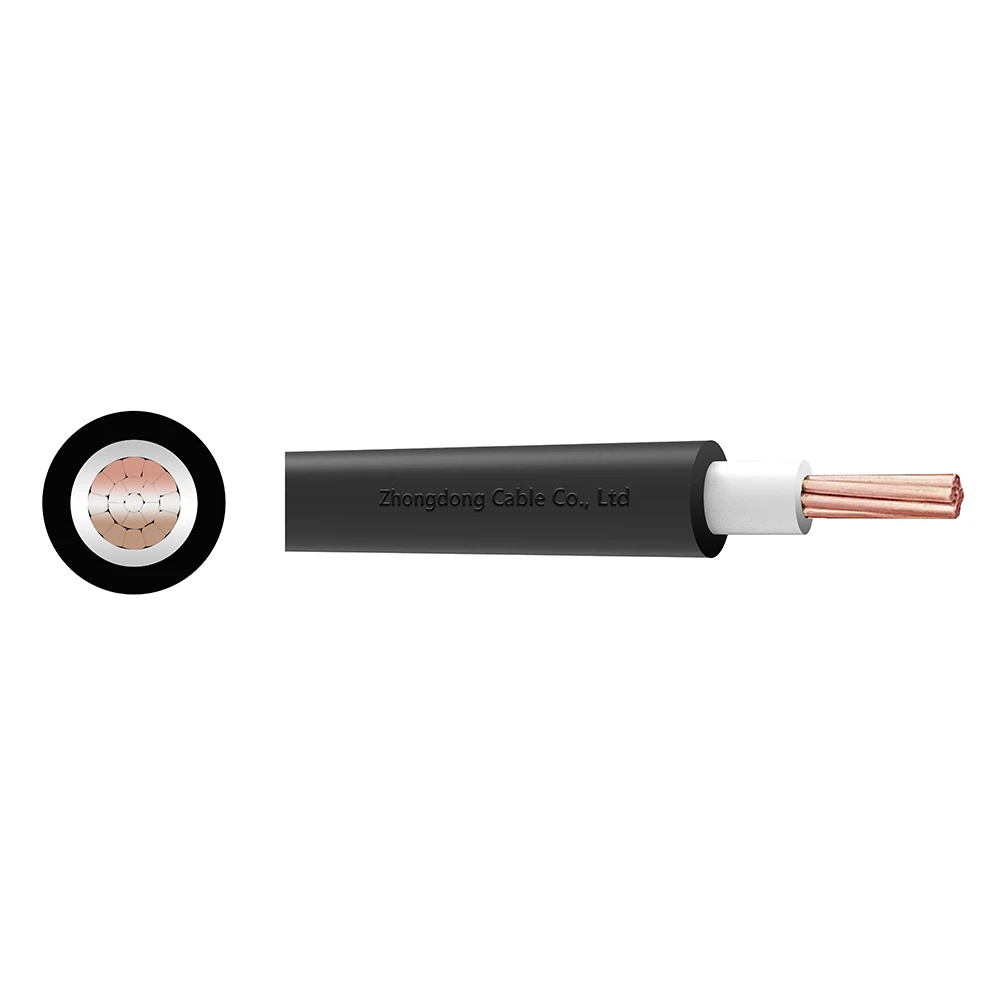 CU/XLPE/PVC Single Core Power Cable 0.6/1kV
Zhongdong Cable combines premium raw materials, large-scale manufacturing capabilities, and strict quality control systems to deliver cable products that fully match your technical requirements and brand identity.