E-mail:
info@zhongdongcable.com
Tel.: +86 198 2988 5532

Which Standards Apply to Low Voltage Power Cable? The answer depends on the cable’s rated voltage, conductor and insulation materials, intended installation, and destination market. In practical terms, a low voltage power cable is a cable designed to carry electrical power at a low-voltage rating, commonly up to 1,000 V AC in many product and regulatory contexts. Choosing the applicable standards helps businesses specify a cable that fits its operating conditions, pass project inspections, and reduce the risk of costly replacement or downtime.
For purchasers comparing a Low Voltage Cable from Zhongdong Cable Co., Ltd. or another supplier, the key is to match the cable’s declared construction and application to the required product and test standards. A standard number alone does not prove compliance: check the exact edition, scope, test results, and any required certification for the project’s market.

As electrical networks expanded, manufacturers and project owners needed consistent ways to define conductor size, insulation performance, voltage withstand, and fire behavior. National standards first addressed local infrastructure and installation practices. International standards later made it easier to specify and test products across markets, although countries may adopt different editions or add local requirements.
Today, low-voltage power cable standards cover more than the basic ability to conduct electricity. Depending on the application, they may set requirements or test methods for conductor resistance, insulation thickness, voltage testing, flame propagation, smoke emission, and corrosive gases. Installation rules are also important, but they are not the same as a cable product standard.
Start with the cable’s product standard, then identify supporting standards for conductors, test methods, fire performance, and installation. The following are common examples—not a universal checklist for every cable.
| Standard or standard family | What it commonly covers | What a buyer should verify |
|---|---|---|
| IEC 60502-1 | Power cables with extruded insulation and accessories for rated voltages from 1 kV (U0/U 0.6/1 kV) up to 3 kV (1.8/3 kV). | Confirm the cable’s voltage rating, construction, applicable edition, and specified tests. |
| IEC 60228 | Conductor classes and requirements for conductors in insulated cables. | Check conductor material, nominal cross-sectional area, class, and resistance data. |
| IEC 60811 | Test methods for non-metallic materials used in cables, including insulation and sheathing. | Match the relevant test method to the cable material and product specification. |
| IEC 60332 series | Flame propagation tests. IEC 60332-1-2 addresses a single vertically mounted cable; other parts address groups of cables. | Specify the required single-cable or bunched-cable test; these are not interchangeable. |
| IEC 60754 and IEC 61034 | Tests related to halogen acid gas and smoke emission, respectively, when required by the application. | Check the exact part and acceptance criteria; do not assume every low-voltage cable must meet these tests. |
| EN 50525 | European product standards for a range of low-voltage energy cables. | Identify the applicable cable type and national adoption or project specification. |
| ASTM B3 and ASTM B8 | Examples of ASTM requirements for annealed copper wire and concentric-lay-stranded copper conductors. | Use them when required by the purchase specification and applicable to the conductor design. |
| UL 83, UL 44, and UL 1277 | Examples of North American product standards for particular wire and cable types, including thermoplastic-insulated, thermoset-insulated, and tray cables. | Confirm the cable category, listing or certification needs, and installation rules for the project. |
These examples show why “low voltage” by itself is not enough to identify the governing specification. Standards such as ASTM B3 apply to particular conductor materials or forms, while UL standards apply to defined product categories. DIN may appear as a national adoption, such as a DIN EN or DIN EN IEC designation; the applicable text and edition still need to be confirmed.
A frequent specification error is to treat an installation code as the cable’s product standard. For example, NFPA 70, also known as the National Electrical Code, provides installation requirements in the United States. It does not replace the product standard that defines how a particular cable is constructed and tested. Likewise, a project may require both a cable standard and a local electrical code.
For a cross-border project, record the destination country, operating voltage, installation environment, and governing project documents before selecting a cable. Verify which edition has been adopted locally rather than relying only on a supplier’s general statement that a product is “IEC compliant.”
A clear specification makes quotation, manufacturing, inspection, and site approval more reliable. Use this sequence:
For example, IEC 60228 gives conductor requirements, while IEC 60502-1 covers specified power-cable designs in its voltage range. A test report should identify the tested cable construction and sample, not merely list standard numbers. Dimensional checks may use instruments with 0.01 mm resolution when appropriate, but that resolution is a quality-control choice—not a universal requirement imposed on every cable by those standards.
When a buyer requests 100% routine testing of each cable length, the supplier should state the tests, acceptance limits, and records included. A 24-hour response time can also be set as a procurement service-level agreement, but it is not a cable-standard requirement.
Consider an industrial facility specifying a 0.6/1 kV power cable for fixed installation. The engineering team first confirms the local code, environmental conditions, conductor size, and whether armor or special fire performance is needed. It then names the applicable product standard—potentially IEC 60502-1 for a cable within that standard’s scope—and specifies conductor requirements such as IEC 60228 where appropriate.
Before approving the order, the team checks the datasheet against the project specification, reviews the relevant test reports, and confirms reel labels and traceability. If the building design calls for bunched-cable flame testing or low-smoke performance, those requirements are written explicitly rather than inferred from the phrase “fire resistant.” This approach catches mismatches before delivery and supports a more defensible inspection record.
When evaluating a Low Voltage Cable from Zhongdong Cable Co., Ltd., provide the intended market and application and ask for documentation tied to the exact proposed construction. Useful items include:
Do not assume that every listed standard or certification applies to every product. Confirm the scope against the cable model, rating, and intended use before placing an order.
Which Standards Apply to Low Voltage Power Cable? Select the answer by matching the cable’s rating and construction to the product standard, then add the conductor, material-test, fire-performance, and installation requirements that the project actually needs. IEC 60502-1, IEC 60228, IEC 60332, EN 50525, ASTM, and UL standards each serve different scopes; none should be treated as a universal substitute for the others.
For a dependable specification, document the destination market, exact standard editions, required tests, inspection frequency, and evidence needed for acceptance. These steps help businesses buy a Low Voltage Cable that is suitable for the job and easier to verify. Share the project voltage, installation conditions, and market requirements with your cable supplier before finalizing the specification.


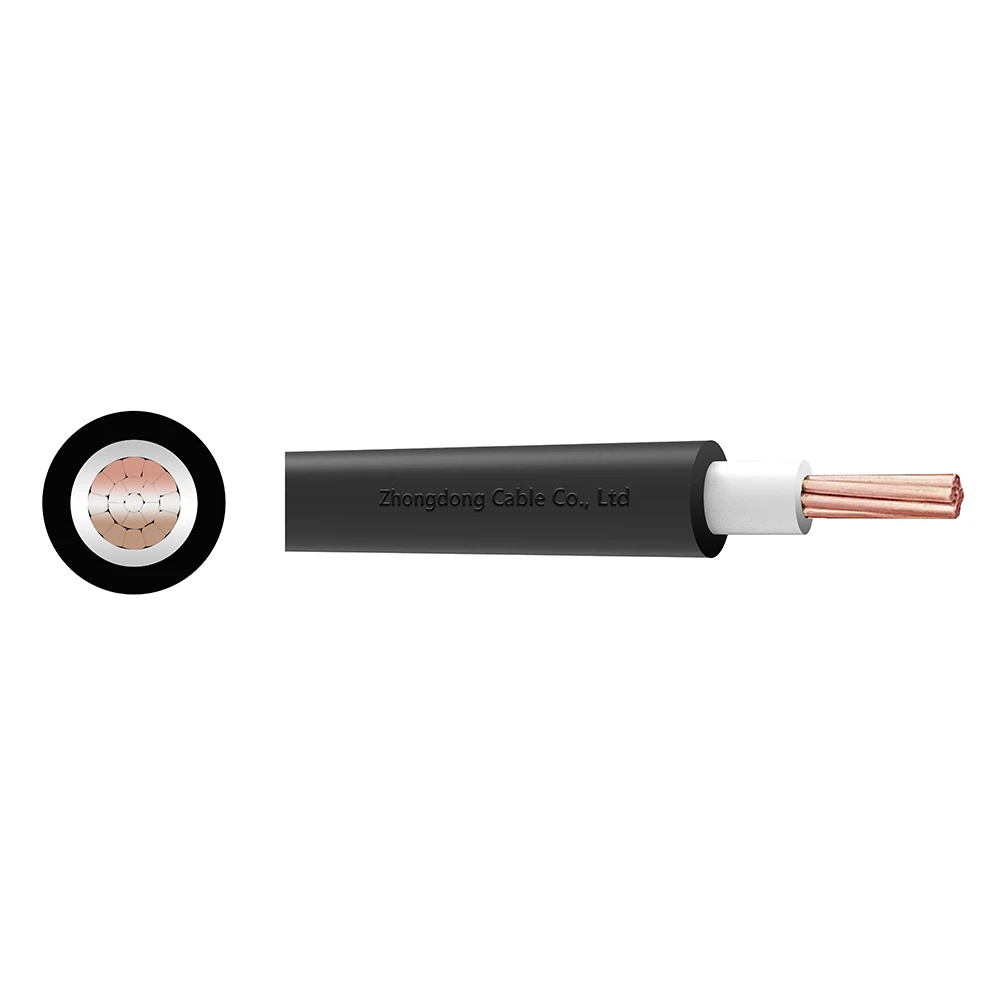 CU/XLPE/PVC Single Core Power Cable 0.6/1kV
Zhongdong Cable combines premium raw materials, large-scale manufacturing capabilities, and strict quality control systems to deliver cable products that fully match your technical requirements and brand identity.