E-mail:
info@zhongdongcable.com
Tel.: +86 198 2988 5532
A cable route may pass through buried ground, a factory floor, or an area where mechanical damage is a concern. Choosing the right protection matters, especially for single-core AC power cables. AWA armour—aluminium wire armour—is commonly considered for this type of installation because aluminium is non-magnetic. This guide explains when to use AWA armoured Low Voltage Cable, what the armour does, and what to check before specifying it.

AWA means Aluminium Wire Armour. It is a layer of aluminium wires placed around a cable’s bedding or inner covering. An outer sheath usually covers the armour to help protect the cable from the environment. The complete layer arrangement depends on the cable design and applicable specification.
Armour provides mechanical protection and can form part of the cable’s protective earthing arrangement when designed and installed for that purpose. It does not replace the conductor insulation, and it does not automatically make a cable waterproof, UV-resistant, or suitable for every buried installation. Those properties depend on the cable construction, accessories, installation method, and project requirements.
“Low voltage” commonly describes systems up to 1,000 V AC, but definitions and cable designations can vary by standard and region. A 0.6/1 kV rating is common for many low-voltage power cables; always confirm the exact voltage rating and standard stated in the project specification.
AWA is most often selected for single-core AC power cables. When alternating current flows through a conductor, it produces a changing magnetic field. Steel is magnetic, so steel wire armour around an individual AC conductor can experience induced magnetic effects and additional losses. Aluminium is non-magnetic, making AWA a common armour choice for single-core AC cable designs.
This is a design consideration, not a rule that every single-core cable must use AWA. The cable engineer must assess the conductor arrangement, current, installation method, fault conditions, and applicable electrical rules. For example, the way single-core cables are grouped or spaced can affect magnetic fields, cable heating, and current-carrying capacity.
AWA may be specified when a single-core cable needs mechanical protection and the design calls for non-magnetic armour. For many multicore AC cables, steel wire armour (SWA) may be suitable because the magnetic effects of the phase currents tend to balance within the cable construction. The final choice still depends on the cable design and local requirements.
AWA is not automatically the right option for every outdoor or underground route. Check whether the cable sheath is suitable for moisture, sunlight, chemicals, temperature, and the installation environment. Also confirm that the cable and its glands or termination kits are compatible.
Do not select a cable based only on armour material. Conductor size, insulation, sheath, voltage rating, current rating, short-circuit performance, and installation conditions all affect suitability. IEC 60228 covers conductor classes and sizes, while IEC 60502-1 addresses construction and testing for certain extruded-insulation power cables rated from 1 kV (Um 1.2 kV) up to 3 kV (Um 3.6 kV). Confirm the edition and national adoption required by the project; these standards do not replace a full installation design.
For a single-core low voltage cable with aluminium wire armour, ask the cable supplier or project engineer to confirm that the proposed construction fits the electrical design and local installation rules. Current capacity and fault performance are calculated from the complete installation; they cannot be reliably inferred from the armour material alone.
| Feature | AWA | SWA |
|---|---|---|
| Full name | Aluminium Wire Armour | Steel Wire Armour |
| Armour material | Aluminium | Steel |
| Magnetic property | Non-magnetic | Magnetic |
| Common design consideration | Often considered for single-core AC cables to avoid magnetic armour effects | Often used on suitable multicore cable designs, subject to project requirements |
This comparison is a guide, not a product-selection rule. Cable standards, national wiring rules, fault levels, and installation conditions can change which construction is acceptable. Ask for engineering confirmation when replacing one armour type with another.
Installation and testing should be carried out by qualified personnel under the applicable electrical rules. The cable manufacturer’s installation guide and the project drawings take priority over general online guidance.
No. It is particularly common as a design choice for single-core AC power cables because aluminium is non-magnetic. The specified cable construction should still follow the project design and applicable standards.
Sometimes, but armour alone does not prove that a cable is suitable for direct burial. Check the cable datasheet, sheath material, local regulations, soil conditions, required burial protection, and installation method before use.
It may form part of a protective earthing path when the cable is designed, installed, and terminated for that purpose. Its continuity and ability to meet fault-current requirements must be verified by the electrical designer or installer.
Neither is universally better. AWA is non-magnetic and is commonly considered for single-core AC cables. SWA is magnetic and may suit many multicore cable designs. The right choice depends on the cable arrangement, electrical calculations, mechanical risk, and local rules.
It is a common cable voltage designation: 0.6 kV refers to the rated voltage between a conductor and earth, and 1 kV to the rated voltage between conductors, subject to the applicable standard and cable design. Always check the manufacturer’s rating and the system requirements.
Before ordering, prepare the system voltage, conductor size, circuit current, route length, installation method, environmental conditions, and required standard. Then request a construction drawing and datasheet so the armour, sheath, and terminations can be checked together. For help comparing specifications or discussing when to use AWA armour for low voltage power cable, contact Zhongdong Cable Co., Ltd. and review the product documentation and installation guide for the proposed cable.


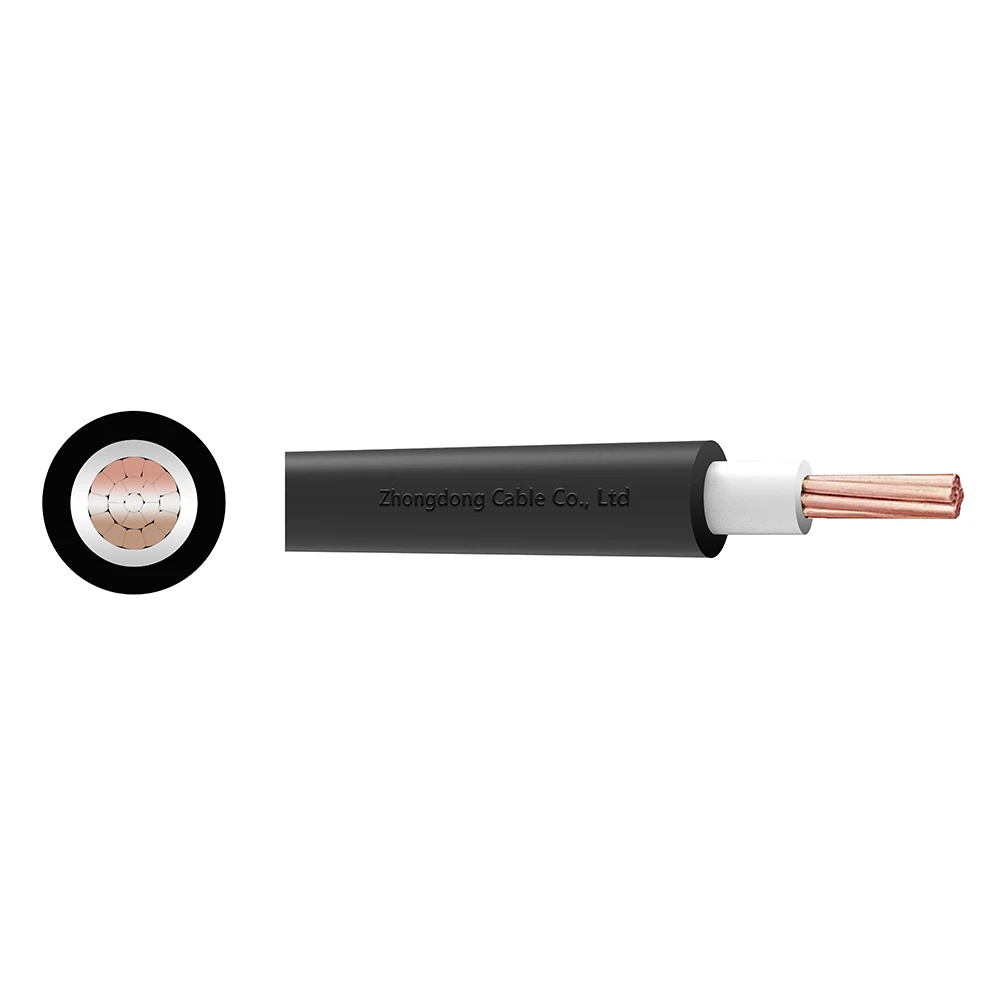 CU/XLPE/PVC Single Core Power Cable 0.6/1kV
Zhongdong Cable combines premium raw materials, large-scale manufacturing capabilities, and strict quality control systems to deliver cable products that fully match your technical requirements and brand identity.