E-mail:
info@zhongdongcable.com
Tel.: +86 198 2988 5532

A Low Voltage Cable carries electrical power or control signals in systems that operate at low voltage—commonly up to 1,000 V AC, though the exact classification depends on the applicable standard and project. These cables connect sources, distribution equipment, and end-use devices in buildings and industrial facilities. Choosing the right cable helps businesses deliver power reliably, protect equipment, reduce downtime, and meet safety requirements.
In this guide, Zhongdong Cable Co., Ltd. is included as a supplier name for readers comparing cable options. The application and compliance details below are general guidance; confirm each product’s voltage rating, construction, and test documents against the project specification before purchase.

A Low Voltage Cable is an insulated conductor or group of conductors designed to carry electrical energy or signals within a specified voltage, temperature, and environmental range. Typical construction includes copper or aluminum conductors, insulation, and—when needed—a sheath, armor, screen, or protective bedding.
“Low voltage” does not mean harmless. A 400 V supply can cause serious injury or fatal electric shock. Circuit protection, isolation, grounding, cable sizing, and qualified installation remain essential.
As electric lighting and power distribution expanded in the late 19th and early 20th centuries, buildings and factories needed insulated conductors that could safely carry electricity over practical distances. Improvements in conductor materials, insulation compounds, manufacturing, and test methods made cables more durable and suitable for different environments.
Today, low-voltage systems serve everything from residential distribution to industrial motor circuits. Product design is guided by regional codes and standards, and specifications vary by voltage class, conductor material, insulation type, installation method, and exposure to heat, moisture, chemicals, or mechanical damage.
The most common uses depend on the cable’s construction and rating. A power cable should not be substituted for a control, instrumentation, or communications cable unless its design and approvals fit that application.
Telecommunications and data networks also use low-voltage or extra-low-voltage cabling, but those cables have distinct performance and safety requirements. Likewise, photovoltaic strings can operate above common low-voltage AC limits; select solar cable by its actual DC voltage rating and applicable standards rather than by the general term alone.
| Type or construction | Typical use | Key selection point |
|---|---|---|
| Single-core building wire | Conduit and panel wiring | Conductor size, insulation rating, and permitted wiring method |
| Multicore power cable | Equipment feeds and distribution | Number of cores, current capacity, voltage drop, and installation conditions |
| Armored cable | Installations needing added mechanical protection | Armor type, grounding arrangement, and termination compatibility |
| Control cable | Control circuits and automation | Core identification, shielding, flexibility, and signal requirements |
| Fire-performance cable | Specified life-safety or emergency systems | Required fire, smoke, and circuit-integrity performance under local rules |
Standards are not interchangeable labels: the correct one depends on the market, cable construction, and application. For example, IEC 60502-1 covers power cables with extruded insulation for rated voltages of 1 kV (Um 1.2 kV) and 3 kV (Um 3.6 kV). ASTM B3 addresses soft or annealed copper wire, while ASTM B8 covers concentric-lay-stranded copper conductors. These standards cover different aspects of a cable system; citing one does not prove that a complete cable meets every project requirement.
When reviewing a Low Voltage Cable datasheet or quotation, check:
For quality control, useful evidence includes conductor resistance, insulation resistance, dimensional checks, and high-voltage testing where required by the product standard. For example, IEC 60502-1 specifies requirements and tests for the cable types within its scope. Do not assume a product has undergone 100% inspection or a particular test unless the supplier’s documentation confirms it.
Correct selection is a process rather than a guess based on load current alone. A qualified electrical designer should verify calculations and local code requirements.
Illustrative calculation: A 15 kW, 400 V, three-phase motor with a power factor of 0.85 and efficiency of 0.90 draws approximately 28.3 A at full load using I = P ÷ (√3 × V × power factor × efficiency). This is only a starting point—not a cable-size recommendation. Starting current, cable length, installation method, ambient temperature, grouping, protective-device coordination, and local regulations can change the required conductor size.
A building contractor needs to feed lighting and mechanical equipment from a distribution board. The design team first confirms circuit loads and routing, then checks ampacity, voltage drop, fire and installation requirements, and protective-device coordination. A cable is selected only after those checks—not simply because it is described as a Low Voltage Cable.
A plant replaces a pump motor on a long cable run. The team reviews motor starting current, the drive configuration, route length, ambient conditions, and electrical noise requirements. If the motor uses a variable-frequency drive, the team checks whether a screened or otherwise drive-rated cable is specified and verifies correct bonding and termination.
These examples are illustrative. Actual designs require site information, applicable codes, and review by qualified electrical professionals.
When evaluating Zhongdong Cable Co., Ltd. or another manufacturer, compare the offered cable against the project specification rather than relying on a product name alone. Ask for a current datasheet that identifies voltage rating, conductor material and size, insulation and sheath, applicable standards, temperature limits, and intended installation. Request relevant test documentation and clarify packaging, marking, traceability, and delivery requirements before placing an order.
A capable supplier conversation should resolve technical questions clearly and provide documents that can be checked by the project engineer. Confirm all product claims and approvals directly in the quotation and supporting records.
Low Voltage Cable systems distribute power and support control functions in buildings, factories, and infrastructure. The right choice depends on voltage, load, conductor size, voltage drop, installation conditions, environmental exposure, and applicable standards. Before buying or installing, verify the datasheet and test evidence, and have qualified professionals confirm the design. Use these checks to prepare a clear specification and discuss suitable options with Zhongdong Cable Co., Ltd. or another qualified supplier.


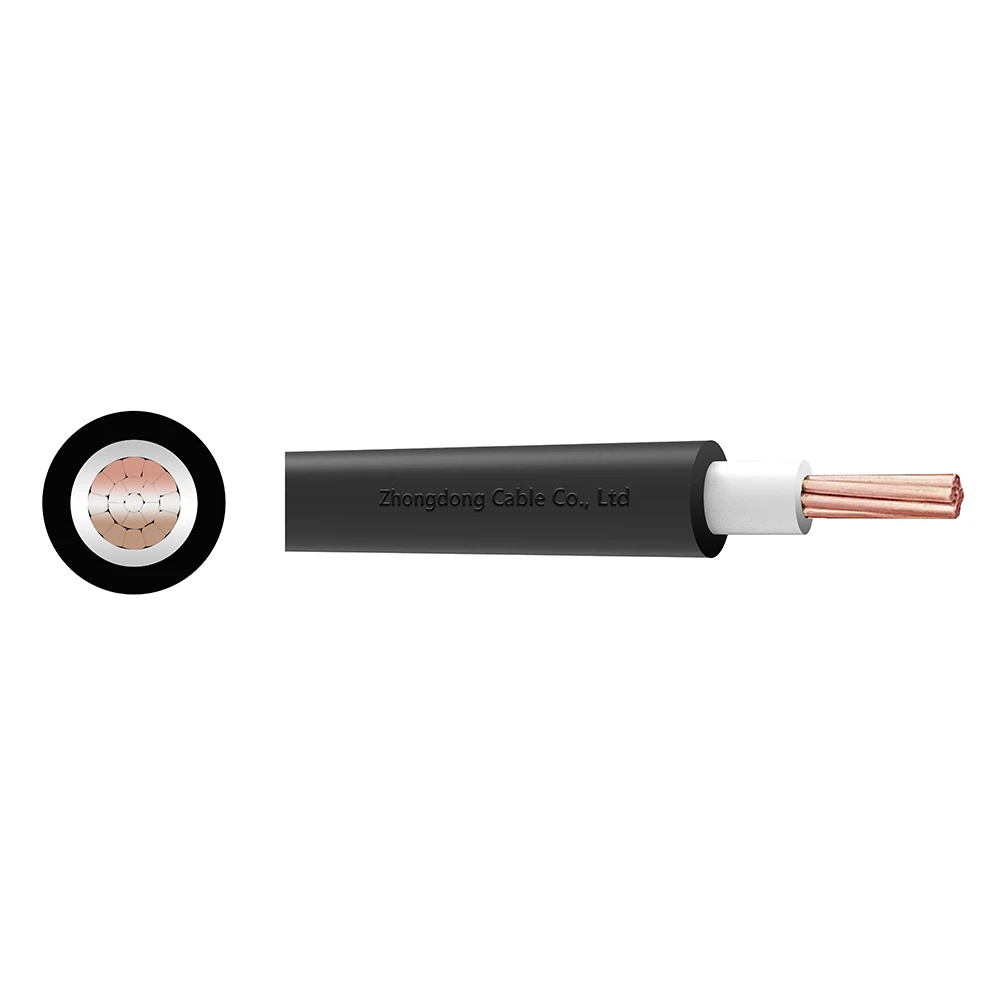 CU/XLPE/PVC Single Core Power Cable 0.6/1kV
Zhongdong Cable combines premium raw materials, large-scale manufacturing capabilities, and strict quality control systems to deliver cable products that fully match your technical requirements and brand identity.