E-mail:
info@zhongdongcable.com
Tel.: +86 198 2988 5532

Choosing between flame-retardant and fire-resistant Low Voltage Cable is not simply a choice between two labels. One property helps limit flame spread; the other is intended to keep a circuit working during a defined fire test. Buyers need to match the cable to the building's fire strategy, the circuits that must remain operational, applicable codes, and the evidence required from a supplier.
This guide explains the difference, compares the main selection parameters, and outlines practical advantages, limitations, and use cases. When reviewing options from Zhongdong Cable Co., Ltd. or another manufacturer, confirm the exact cable construction and test documentation for the intended installation rather than relying on a product name alone.

Flame-retardant cable is designed to resist igniting or to limit the spread of flame under specified test conditions. Depending on the product and applicable standard, a test may assess whether flame spread stays within a defined limit after exposure to a flame source. This property can help reduce the chance that a cable run becomes a path for fire to travel.
Flame retardancy does not, by itself, mean that the cable will continue carrying power or signals during a fire. Conductors, insulation, and other components may fail when exposed to high temperatures. Buyers should also distinguish flame-retardant performance from low-smoke and halogen-free properties, which address different fire-related hazards.
Fire-resistant cable is designed to keep a circuit operating for a stated period under the conditions of a specified fire test. Its construction may use fire-resistant barriers, such as mica-based tape, and compatible insulation and sheathing. The design and test result must be checked for the complete cable type, because construction details affect performance.
Circuit integrity is useful only when the full electrical system supports it. Terminations, joints, supports, containment, protective devices, and installation methods may all affect whether a circuit remains functional in a real emergency. A fire-resistant cable should therefore be specified as part of a tested or code-compliant system where required, not treated as a guarantee of uninterrupted operation in every fire.
The following comparison is a selection guide, not a substitute for the applicable product standard. Test methods, pass criteria, and permitted claims vary by market and cable design. Request the test report for the exact cable construction and rated voltage being quoted.
| Parameter | Flame-retardant Low Voltage Cable | Fire-resistant Low Voltage Cable | What the buyer should verify |
|---|---|---|---|
| Primary purpose | Limit flame spread along or from the cable under a specified test | Maintain electrical circuit integrity for a stated duration under a specified fire test | Whether the project needs restricted flame spread, continued operation, or both |
| Typical test focus | Flame propagation and, where specified, performance of a cable or cable group | Electrical continuity during exposure to defined fire conditions | Standard edition, test setup, sample configuration, duration, and pass criteria |
| Performance during a fire | May limit flame spread but is not necessarily expected to keep the circuit working | Designed to maintain circuit function for the tested conditions and duration | Exact circuit function and duration required by the fire strategy or code |
| Construction | May use flame-retardant compounds and a suitable cable design | May include fire-resistant barriers and other components selected to preserve circuit integrity | Conductor material, insulation, barrier, sheath, armor, and complete construction |
| Other fire properties | Flame retardancy does not automatically mean low smoke or halogen-free | Fire resistance does not automatically mean low smoke or halogen-free | Separate smoke density, halogen acid gas, and toxicity requirements where applicable |
| Electrical ratings | Must meet the required voltage, current, conductor size, and installation conditions | Must meet the same electrical requirements in addition to the required fire test | Rated voltage, conductor size, current capacity, voltage drop, and fault conditions |
| Installation dependence | Installation affects the cable's exposure and overall fire behavior | Supports, joints, glands, and routing can affect circuit integrity | Approved accessories, fixing intervals, installation method, and system evidence |
| Typical cost implication | Often a lower-cost option when circuit survival is not required, but actual pricing varies | May cost more because of construction, testing, and system requirements | Total installed cost, maintenance, compliance, and consequences of circuit failure |
Voltage rating and conductor size are not replaced by a fire-performance label. Confirm that the selected Low Voltage Cable meets the project's electrical design first, then check fire performance, environmental conditions, and installation requirements.
Standards such as the IEC 60332 series are associated with tests for flame propagation, while IEC 60331 is used for fire-resistance testing of electrical cables under specified conditions. Other standards and approval schemes may apply in particular countries or sectors. These references are examples, not a declaration that every cable must meet the same standard.
Before accepting a claim, check the following:
A certificate for a similar product is not necessarily evidence for the cable being purchased. If a specification calls for both flame retardancy and circuit integrity, request evidence for both properties instead of assuming one claim includes the other.
Low Voltage Cable is a passive electrical component and has no battery life. The practical equivalent for a purchasing team is whether the cable provides reliable service under normal operating conditions and, for designated emergency circuits, whether the complete circuit remains functional for the required fire-test period.
In ordinary service, stability depends on correct sizing, sound terminations, suitable routing, proper support, and compatibility with heat, moisture, chemicals, movement, and sunlight at the site. A cable with an appropriate fire rating can still fail early if it is undersized, damaged during installation, bent beyond its limits, or used outside its environmental rating.
During a fire, a flame-retardant cable may help limit flame spread but should not be assumed to maintain power. A fire-resistant cable offers a different benefit: tested circuit integrity for defined conditions. Actual building performance can still be affected by joints, supports, equipment connections, protective devices, smoke, water, and heat beyond the test conditions.
For a useful purchasing comparison, ask suppliers to identify the operating temperature range, conductor resistance, insulation and sheath materials, bend radius, installation limits, and any relevant aging or environmental tests. Then compare these details with the project's load and site conditions. A fire-performance label cannot compensate for a mismatch in electrical or environmental ratings.
Neither category is universally better. The right choice is the cable whose documented performance matches the consequence of circuit failure and the applicable project rules.
Flame-retardant Low Voltage Cable may suit ordinary distribution, lighting, or control circuits when the electrical design and local codes call for flame-spread control but do not require the circuit to remain operational during a fire. The final decision should account for building type, occupancy, evacuation strategy, and project specifications.
Fire-resistant Low Voltage Cable is often considered for circuits that a fire strategy or code requires to operate during an emergency. Examples can include fire alarms, emergency lighting, smoke control, fire pumps, or other essential services, subject to local regulations and system design. Not every circuit in these systems automatically requires the same cable; the engineer's specification and authority requirements govern.
Some projects need both restricted flame spread and continued operation for selected circuits. In that case, specify and verify both properties explicitly. Also define the required test duration, installation system, environmental conditions, voltage rating, conductor size, and acceptance documents before requesting quotations.
When seeking a quotation, provide the cable schedule and required test evidence. Zhongdong Cable Co., Ltd. can be included in the supplier comparison, but purchasers should apply the same construction, documentation, and compliance checks to every proposed Low Voltage Cable.
Flame-retardant cable is primarily intended to limit flame propagation. Fire-resistant cable is intended to maintain circuit integrity for a specified fire-test period. Those are different outcomes, and neither term alone covers every fire-safety property. Check the standards, test reports, complete system requirements, and electrical ratings before approval.
For general circuits where continued operation during a fire is not required, flame-retardant Low Voltage Cable may meet the design intent. For designated emergency circuits that must remain functional, select a documented fire-resistant solution and verify compatible installation components. Where both outcomes are required, state both requirements in the purchase specification. This approach helps the project team buy the right Low Voltage Cable for the actual risk rather than paying for an unsuitable label or relying on an unverified claim.


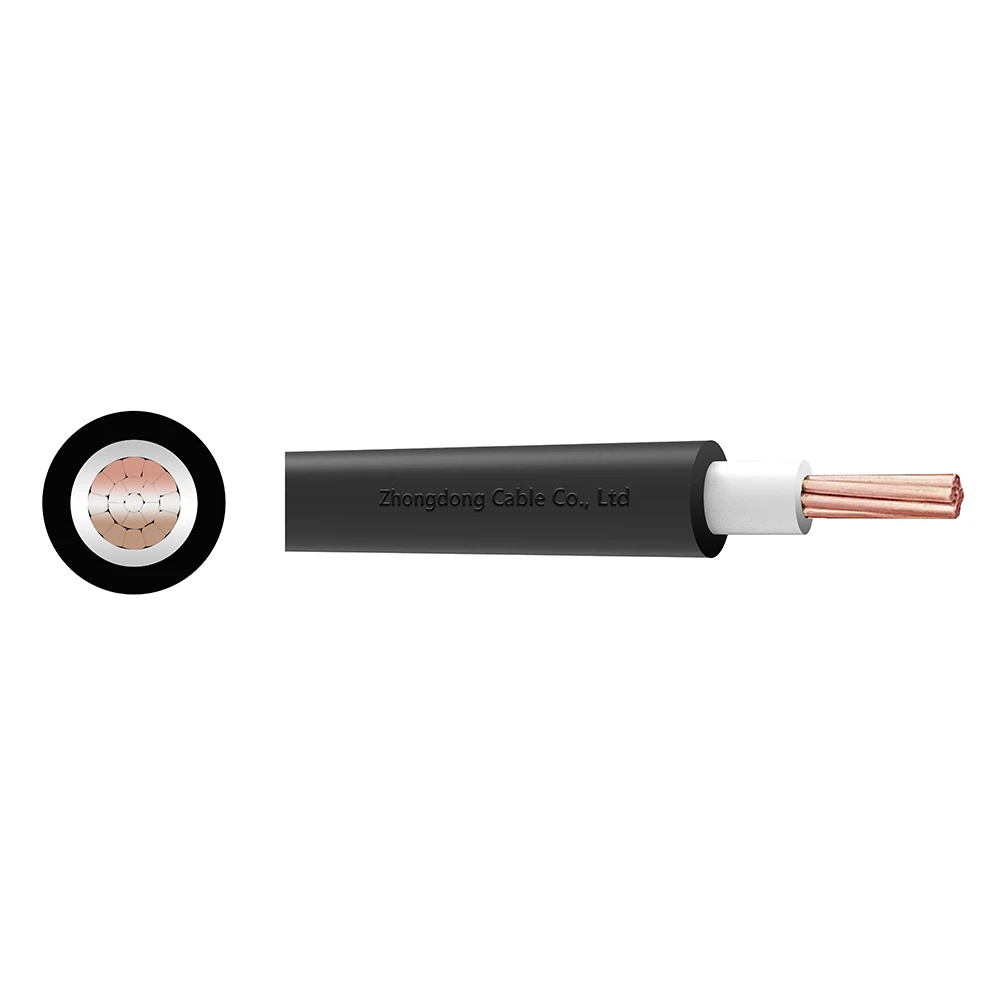 CU/XLPE/PVC Single Core Power Cable 0.6/1kV
Zhongdong Cable combines premium raw materials, large-scale manufacturing capabilities, and strict quality control systems to deliver cable products that fully match your technical requirements and brand identity.