E-mail:
info@zhongdongcable.com
Tel.: +86 198 2988 5532

Choosing between armoured and unarmoured Low Voltage Cable affects installation, mechanical protection, project cost, and long-term reliability. The right option depends on where the cable will run, what hazards it may face, and how it will be installed. Zhongdong Cable Co., Ltd. helps buyers evaluate cable constructions against project requirements rather than assuming that one type is always better.

Armoured cable adds a metallic protective layer beneath the outer sheath. Depending on its construction, that layer may be steel wire or steel tape. It can help resist impact, crushing, and other mechanical hazards, making it a practical choice for exposed routes, industrial areas, and some buried installations when the cable and local rules permit that use.
Unarmoured cable has no metallic armour layer. It is often lighter, more flexible, and easier to handle in conduit, trunking, ducts, or protected indoor routes. Its suitability depends on the strength of the surrounding installation system and the risk of damage during installation and service.
In practice, buyers should assess the complete route rather than only the cable at the equipment end. A protected section can become exposed near a panel, wall penetration, or outdoor transition. Those vulnerable points can change the decision.
The table below describes common differences. Exact construction and ratings vary by product, voltage class, applicable standard, and manufacturer. Confirm the approved datasheet and project specification before ordering.
| Parameter | Armoured Low Voltage Cable | Unarmoured Low Voltage Cable | Buyer check |
|---|---|---|---|
| Typical voltage class | Commonly supplied in low voltage ratings such as 0.6/1 kV | Commonly supplied in low voltage ratings such as 0.6/1 kV | Verify the required rated voltage and applicable standard; armour does not determine voltage rating. |
| Conductor | Copper or aluminium, depending on design | Copper or aluminium, depending on design | Confirm conductor material, cross-sectional area, strand class, and termination compatibility. |
| Insulation | Commonly XLPE or PVC, depending on product | Commonly XLPE or PVC, depending on product | Check temperature rating, electrical requirements, and environmental suitability. |
| Mechanical layer | Steel wire or steel tape armour is common | No metallic armour layer | Confirm armour type and whether the design meets the route's mechanical protection needs. |
| Outer sheath | Sheath covers the armour and protects the cable assembly | Sheath provides the outer cable protection | Check resistance to moisture, ultraviolet exposure, chemicals, and abrasion as applicable. |
| Handling and flexibility | Usually heavier and less flexible for a comparable construction | Usually lighter and easier to route in protected pathways | Review bend radius, pulling tension, support spacing, and access constraints. |
| Current carrying capacity | Set by conductor, insulation, installation method, ambient conditions, and derating factors | Set by conductor, insulation, installation method, ambient conditions, and derating factors | Do not assume armour increases ampacity; use the applicable design calculations and datasheet. |
| Grounding and bonding | Armour may require bonding and may have an electrical role if the design and rules allow it | Protective earthing is generally provided separately | Confirm fault-current path, earthing design, glands, and local code requirements. |
One important point follows from the comparison: armour adds mechanical protection, not a general upgrade to every electrical parameter. Conductor size, insulation, installation conditions, and design calculations still determine the electrical performance.
Low Voltage Cable has no battery, so battery life is not a relevant performance measure. For a cable, buyers should instead consider service life, stable electrical operation, insulation condition, and the likelihood of physical damage or installation defects.
Field experience depends heavily on workmanship. Correct cable sizing, bend radius, support, gland selection, sealing, and termination can have more influence on stable service than choosing armour alone.
Armoured cable often costs more per metre and may take longer to handle and terminate. Its added protection may reduce the need for some separate mechanical safeguards, but that saving depends on the route design and must not be assumed. Glands, bonding components, tools, and installer time can also affect the total.
Unarmoured cable may have a lower purchase price and faster installation in a protected pathway. However, conduit, trunking, barriers, or other protection may be needed. If the route is vulnerable, the cost of that protection should be included before comparing quotations.
A lower initial price can be poor value if it leaves a cable exposed to predictable damage. Conversely, specifying armour on a fully protected route may add cost and handling effort without solving a real project risk.
Armoured cable advantages include:
Armoured cable disadvantages include:
Unarmoured cable advantages include:
Unarmoured cable disadvantages include:
For electrical contractors, installation practicality is often a leading concern. Check route access, bend radius, pulling conditions, termination space, and the availability of compatible glands and accessories.
For project engineers and consultants, prioritize compliance, electrical calculations, fault protection, environmental ratings, and coordination with the earthing design. Specify construction clearly so that tender comparisons do not treat unlike products as equivalent.
For procurement teams and distributors, compare the complete bill of materials, product documentation, delivery consistency, and traceability. A low quotation is not comparable if it omits required accessories or substitutes a different construction.
For facility owners and maintenance teams, consider the consequences of cable damage, the ease of inspection, replacement access, and the effect of an outage. An exposed route in a busy plant may justify a different choice from a protected route in a controlled building area.
Typical starting points are:
Before requesting a quotation or approving a cable submittal, record the following:
Ask the supplier to identify the exact construction and provide the datasheet for the proposed product. Zhongdong Cable Co., Ltd. can help buyers compare specified Low Voltage Cable options against route conditions, installation needs, and project requirements. The best choice is the cable that meets the electrical design, provides suitable protection, and can be installed and maintained correctly throughout its service life.


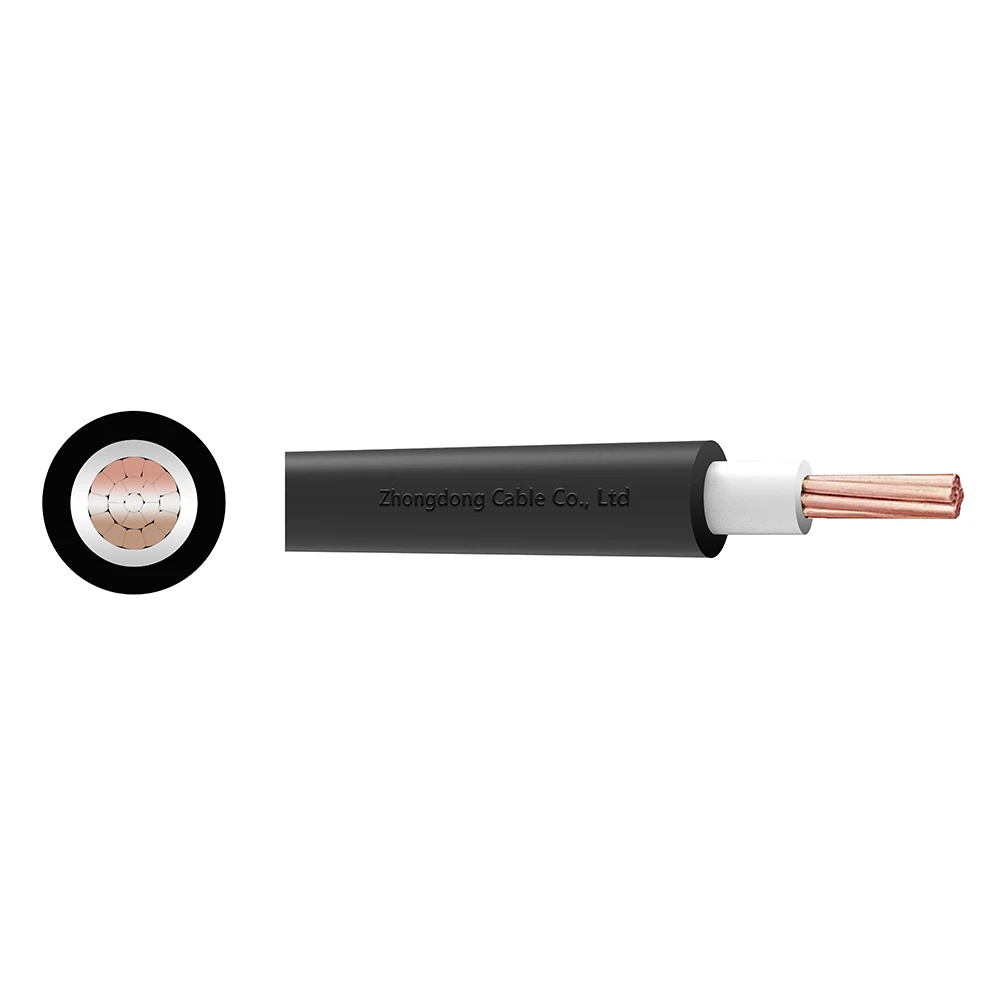 CU/XLPE/PVC Single Core Power Cable 0.6/1kV
Zhongdong Cable combines premium raw materials, large-scale manufacturing capabilities, and strict quality control systems to deliver cable products that fully match your technical requirements and brand identity.